

This year, I discovered the craft of collage, even making my own Christmas cards. Choosing the images and working out how to place them, often in rather surreal ways — an owl with a Christmas pudding on its head, a snowman in a field of poppies looking at an oversized candle on the horizon — became a delightful absorption. I found I had a definite reaction to what fits with what and where. I carry on until I get a sense of ‘yes this is just right’.

In parallel to this, I’ve been engaging in an inquiry into beauty. What is beauty: something universal, something conditioned by context? Or merely a matter of opinion?
Is Beauty transcendent?
On the side of the universal, physicist Roger Penrose speaks of the test of beauty in assessing the mathematics of physics; elegant, harmonious equations are more likely to be ‘right’, he argues, than ungainly, imbalanced ones. One example relates to the equations that govern the movement of the planets in the solar system. If you put the earth in the centre, the equations have many compensatory clauses, but if the sun is assumed to be central (as of course it is), the inelegant twiddly adjustments fall away. In similar vein, Beauty is often viewed as a transcendent quality, like Truth; something that can stand apart from, be abstracted from and transcend the particular. Beauty, in this Platonic reasoning, is deemed to have a universally recognisable quality, a form of Perfection in accordance with a ‘pre-assigned pattern’ as Penrose suggests.
Is beauty contextual?
Then, there is the view that beauty is best thought of in context, in the particular.
Elaine Scarry, for example, in On Beauty (1999:18), says we make a mistake when we “use a general term [like Beauty] because, by using this general term, we have already excluded the fact that all beauty takes place in the particular.” She quotes Proust: “We believed we were taking beauty into account, whereas in fact we left [it] out and replaced [it] by a synthesis in which there is not a single atom.”
Barbara Hepworth takes this further; her sculptures are designed such that their qualities seem to shift — depending on the angle from which they are viewed, on the perception of the viewer, and on the particular conditions of light and atmosphere on the day. Beauty emerges, she feels, in relationship — the relationship between space and sculpture and between viewer and sculpture. She says (Boulton, 2024:165):
There is no fixed point for a sculpture, there’s no fixed point at which you can see it, there’s no fixed point of light in which you can experience it, because it is ever-changing and it’s a sensation which cannot be replaced.
She goes on (Boulton, 2024:166):
A sculpture might, and sculptures do, reside in emptiness, but nothing happens until the living human encounters the image. Then the magic occurs — the magic of scale and weight, form and texture, colour and movement. The encircling interplay and dance occur between the object and human sensibility.
Scarry, in similar vein, embraces the idea of beauty emerging through relationship. She says (1999:25):
At the moment one comes into the presence of something beautiful, it greets you. It lifts away from the neutral background as though coming forward to welcome you — as if the object were designed to ‘fit’ your perception.
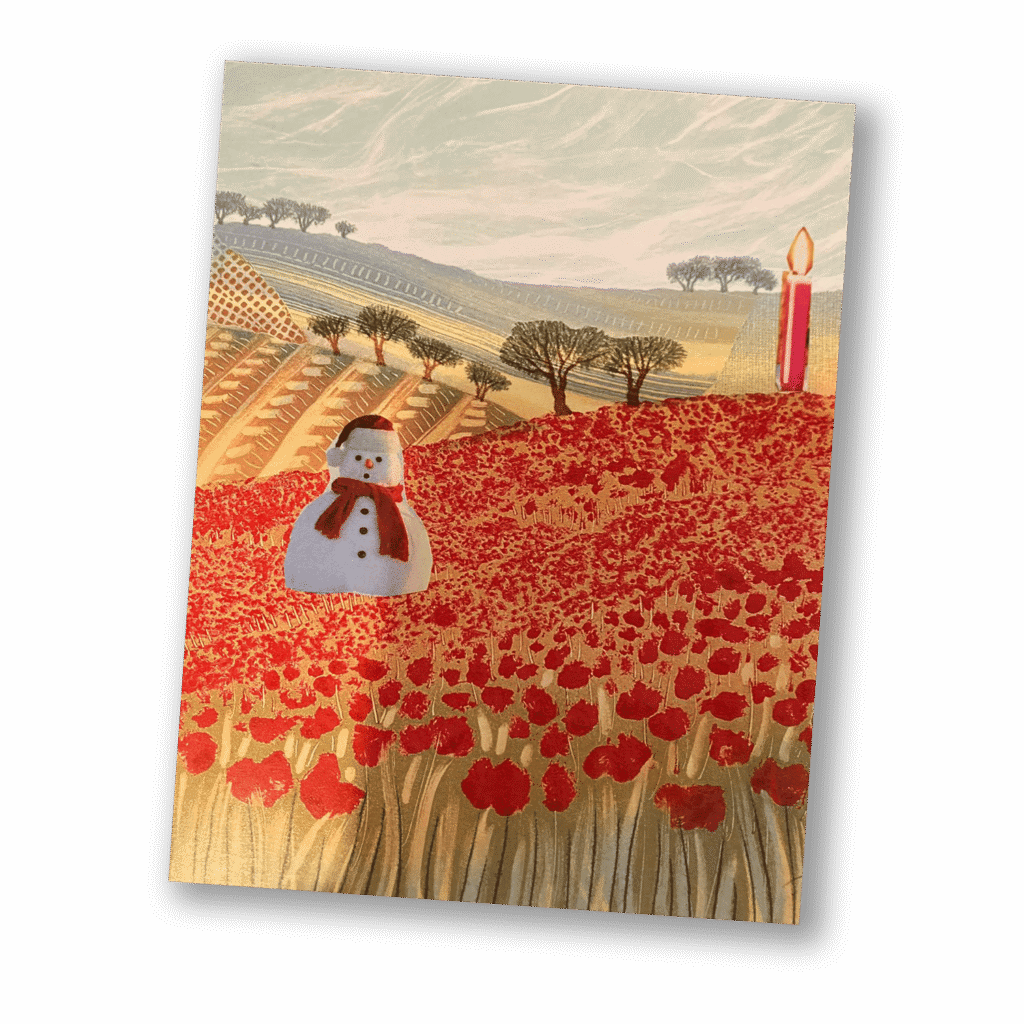
Is there a relationship between beauty and balance?
I find my complexity-marinated self very engaged by this exploration of beauty and in particular the idea of it residing in and through relationship. It resonates, for me, with the work undertaken by Ilya Prigogine (1980, 1984) and by the complexity biologists such as Maturana and Varela (1987), who emphasise how form and pattern emerge through the self-organising, self-regulating, reflexive interweaving of their constituent ‘elements’. To use the Buddhist phrase, such self-organising form is empty in that it only continues to sustain through the reciprocal interaction of its constituents — whether we are giving attention to ‘complexes’ in the human psyche, synergistic webs of relationships between flora and fauna in a particular wood or forest, or the behavioural and cultural norms in communities, families and societies.
Prigogine and the complexity biologists don’t talk about beauty per se but, implicit in the ideas of self-organisation and self-regulation, is the notion of balance or harmony. That is what self-regulation is — a balance that emerges and is sustained through the small shifts and adaptations in the relationships between those elements from which ecologies or societies are constituted.
So, I’m interested in what creates balance and what, if anything, that has to do with beauty. I would not consider my collages beautiful, for example, but they do, to me, have a sense of balance, a sort of rightness in their sometimes-arresting combinations of images. I think, too, of Lowry’s renditions of Manchester mills and the teaming life around them. They have such life and composition — and balance too — and it is perhaps a moot point to ask if they have beauty.
The cosmology of Daoism has a strong resonance with the processual view of complexity introduced by Ilya Prigogine, something I explore and extend in The Dao of Complexity. So, I wonder if my go-to Daoist scholars, Robert Ames and David Hall, have anything to contribute to these considerations? Ames and Hall (Boulton, 2024:105) speak of ‘aesthetic harmony’ and ‘consummate integrity’ in the emerging and stabilising patterns of relationships between elements, patterns which are particular to context. They say:
Integrity in a processual worldview is not being one, but becoming one in the consummatory relationships that one is able to achieve within a context of environing particulars.
This consummate integrity, then, is a balance that emerges through the reflexive interconnecting, interpenetrating relationships between elements that lead to patterning in the social and natural world, where the actual pattern or form that emerges is particular to the context in which it resides. This resulting ‘just rightness’ is a function of the situation — it is not universal nor repeatable.
Ames describes this ‘rightness’ as “the degree to which the insistent particularity of the detail in tension with the consequent unity of these specific details is self-evidently expressive of an aesthetically pleasing order” (Ames 1989:117). And he contrasts this to the Platonic, Western idea of rightness as “the degree of conformity to the pre-assigned pattern [or scientific law].”
So, I think Ames and Hall would understand the reached-for aesthetic harmony of my collage greeting cards, their ‘just rightness’, at least in my eyes, with the particular recipient in mind.
Tenderness
Margaret Gearty, in our study group, where we explored this theme of beauty, introduced another consideration, too. Reflecting on her experiences that arise during walks in her local wood, Margaret found that, to experience its beauty, she needed to adopt a kind of tenderness. “Tenderness,” she says, “because I have found that receptivity and openness is what makes Beauty available to me.” She continues:
[Beauty] is a happening rather than a ‘being made to happen’ moment; it is arising as an inter-subjective moment.
Beauty, then, in her view, is a process not an objective quality and it eludes us if grasped or categorised or approached head on.
But what about Robert Reford?
So, if I ended my piece here, it would all be neat and tidy. Western classical science, following in the footsteps of Plato, would see Beauty as a transcendent universal quality, and we Daoists and process complexity thinkers would favour the idea of an aesthetic harmony in relationship, particular to circumstances — an emerging processual inter-subjective tender experience.
But what about Robert Redford? Since seeing him and Paul Newman in Butch Cassidy and the Sundance Kid and then together again in The Sting, he has epitomised for me a perfection of male beauty. Paul was good looking, but Robert, to me, was gorgeous. My Mother was accredited with that sort of beauty too and it oiled the wheels of her life in many ways.
I was further confronted by this pesky and unfair advantage of possessing beauty through a luscious book, What Art can tell us about Love, by Nick Trend (2025). Trend has pieced together the stories of certain artists and the way they portrayed their partners and lovers. He points to how we can see their love (or lack of it) for their subject in the way they painted. Moreover, the loved ones — the ones artists left their partners for, or maintained alongside — were, without exception, beautiful. The drive to love seemed, at least for these artists, to arrive through the senses, through responding to the appearance of the loved ones; in Trend’s book there is not a plain face in sight!
So, are Robert and my Mother and artists’ muses beautiful in a transcendent way, examples of a universal eternal quality all would recognise, one that crosses culture and history? Or is beauty an emerging convention that endures rather than is eternal (the difference between things that emerge and sustain over long periods in contrast to the notion of qualities that are eternal is a theme explored by Alfred North Whitehead, but I’ll refrain from going further here)? I think there is evidence to show that beauty/attractiveness does vary across history and culture – consider Titian’s buxom women compared with Twiggy, or (so I’ve been told in my sojourns in West Africa) the espoused delight in hips in some African cultures rather than breasts. And, really, do all ‘gentlemen prefer blondes’, to quote the 1953 musical? So, I still feel able to conclude that beauty is a quality that emerges and may endure for a long time — but is not, as Plato would have it, some abstracted quality on which we would all agree.
So, all would be well and I would be content, except for D. H. Lawrence, who poses a third position between the transcendental and the particular in his poem Red Geranium and Godly Mignonette.
He begins:
We know that even God could not imagine the redness of a red geranium nor the smell of mignonette when geraniums were not, and mignonette neither.
And ends:
But imagine, among the mud and the mastodons, God sighing and yearning with tremendous creative yearning, in that dark green mess, oh, for some other beauty, some other beauty that blossomed at last, red geranium, and mignonette.
Lawrence is suggesting that there is some universal tendency, which he attributes to God, that drives towards the emergence of beauty, but where its particular expression is nevertheless emergent and shaped by history and circumstance. This, too, is where Whitehead landed; that the particular instances [of beauty in this instance] are in some sense called up by or derived from eternal archetypal qualities.

Back to balance
So where I am now? I’d like to leave you with a further thought. My alternative interpretation of this universal tendency resides in the way thermodynamic and biological systems tend towards balance. This is because balance requires less energy to maintain than does imbalance. Think of water: it tends towards the flat and needs an input of energy to sustain the structures of waves. ‘Things’ — be they biological organisms or communities or gases or liquids — are more stable when they achieve a dynamic sort of balance. In open systems, energised by their surroundings, there is a tendency towards what physicists call stationarity — a dynamically adaptive capacity requiring power sharing and diversity. So, I could argue this pull towards balance is the source of beauty and, in this respect, there is no need for God to sigh and yearn.